
An encumbrance is any claim, restriction, or right that affects a property’s title, use, or value. It doesn’t always prevent a sale, but it can impact how the property is used or perceived by buyers.
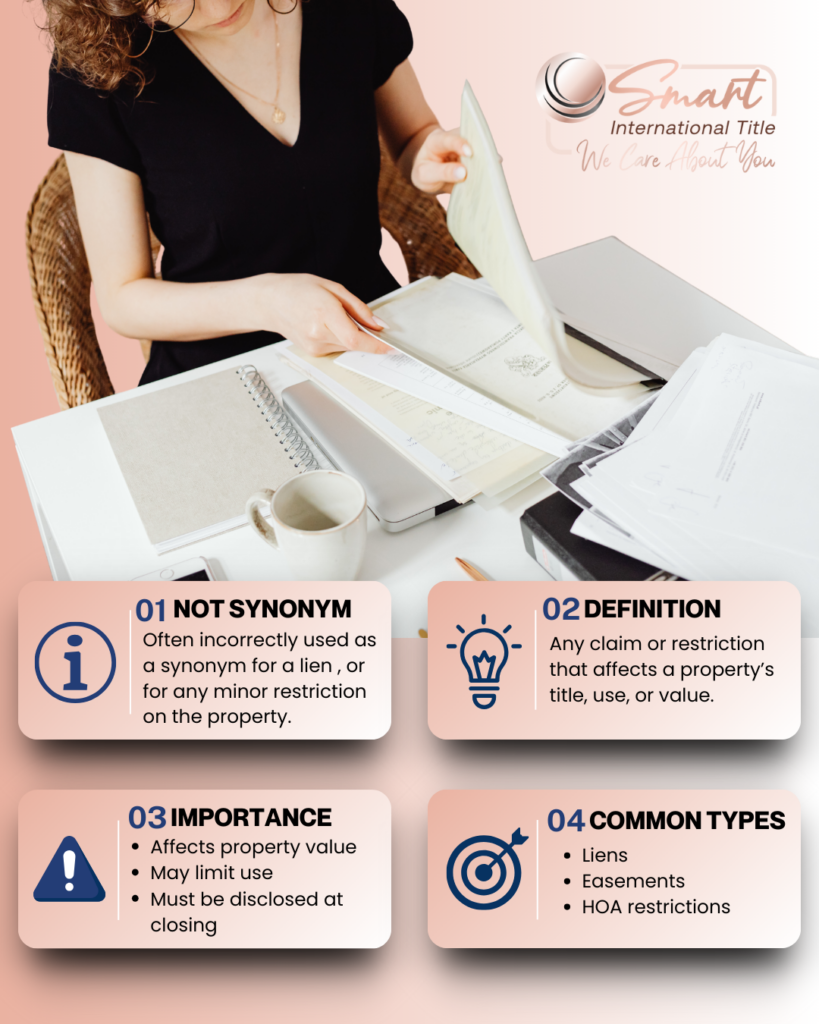
Encumbrances are often misunderstood, especially when they’re confused with liens. The graphic above breaks down the concept in a simple way, but understanding how it shows up in real life is what really matters.
A real-life example
Here’s a common scenario we see during the title process:
A buyer is ready to close on a property and the title search comes back “clear”, no outstanding liens. However, the property has a recorded easement allowing a utility company access to part of the land.
This easement doesn’t stop the sale, but it limits how the property can be used and must be disclosed before closing. That easement is an encumbrance, even though there is no lien involved.
Why this matters for buyers and sellers
Understanding encumbrances helps:
-
Avoid surprises during closing
-
Set realistic expectations about property use
-
Make informed decisions before signing final documents
Encumbrances are not always problems, but they are always important.