

When a homeowner owes more on their mortgage than the home is currently worth, or can no longer afford the mortgage payments, a short sale may be one option to consider.One of the most important, yet often misunderstood, parts of a real estate transaction is the role of a title company. While many buyers focus on financing, inspections, or negotiations, the title company works behind the scenes to ensure the property can legally and safely change ownership.
But what exactly is a short sale? Who has to approve it? How long does it take? And what should buyers and sellers expect?
Whether you’re a homeowner considering a short sale, a buyer looking at a short-sale property, or a real estate professional helping a client, understanding the process can make the transaction much easier to navigate.

What Is a Short Sale?
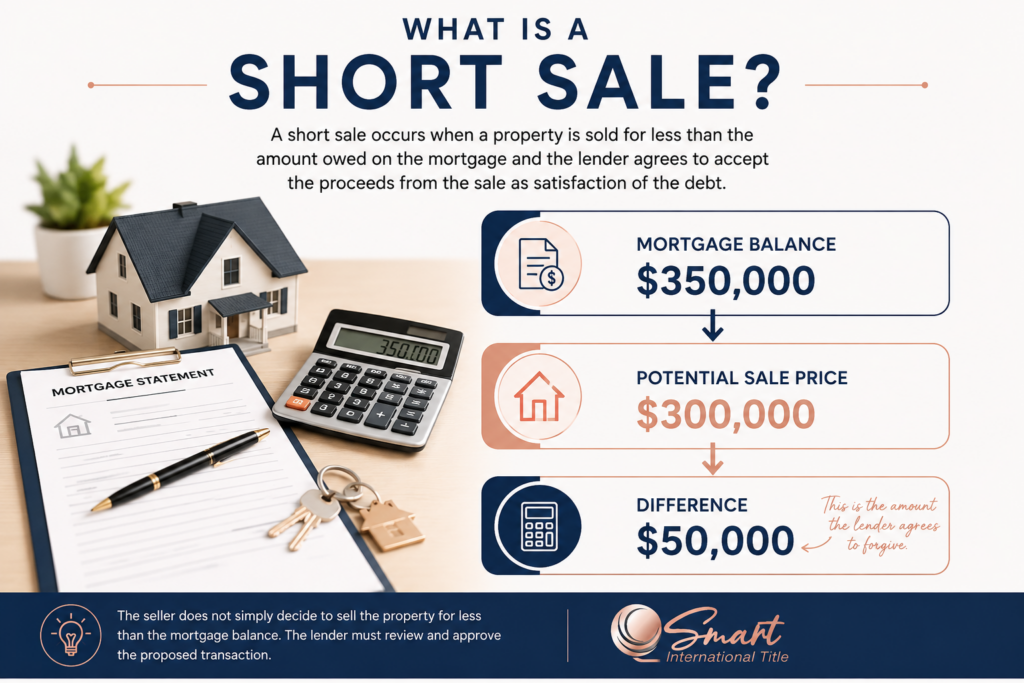
A short sale occurs when a property is sold for less than the amount owed on the mortgage and the lender agrees to accept the proceeds from the sale as satisfaction of the debt, subject to the terms of the lender’s approval.
For example:
Mortgage balance: $350,000
Potential sale price: $300,000
Difference: $50,000
In this situation, the lender would generally need to approve the sale before the transaction can move forward.
And here’s something important: the seller does not simply decide to sell the property for less than the mortgage balance. The lender or mortgage servicer must review and approve the proposed transaction.
Why Would a Homeowner Consider a Short Sale?
Short sales are generally considered when a homeowner is experiencing financial hardship and there is not enough equity in the property to pay off the mortgage and other costs associated with the sale.
Possible circumstances may include:
- Loss of employment or significant reduction in income
- Divorce or separation
- Major unexpected expenses
- Relocation
- A significant decline in the property’s market value
- Other financial hardships
A short sale is not automatically the best solution for every homeowner. The homeowner should discuss their individual situation with qualified financial, legal, and tax professionals before deciding how to proceed.
How Does a Short Sale Work?
Unlike a traditional real estate transaction, a short sale involves an additional layer of review because the lender must approve the proposed sale.
Here’s a simplified look at the process.
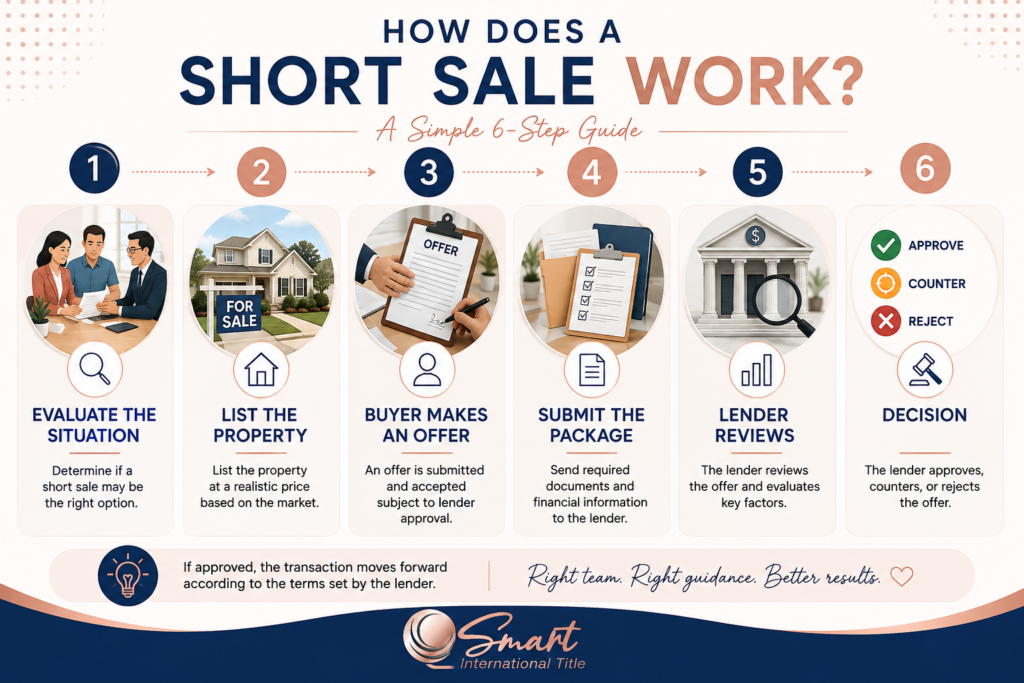
Step 1: The Homeowner Determines Whether a Short Sale May Be Appropriate
The process usually begins when the homeowner realizes that selling the property through a traditional sale may not generate enough money to pay off the mortgage and closing costs. The homeowner, real estate professional, and other appropriate professionals can evaluate the situation and determine whether a short sale should be explored.
Step 2: The Property Is Listed for Sale
The property is typically placed on the market just like other homes. The listing agent works with the seller to determine an appropriate asking price based on current market conditions and the property’s condition.
Important: A short sale does not necessarily mean the property will be dramatically discounted. The goal is to attract a legitimate buyer while presenting the lender with a realistic offer supported by current market information.
Step 3: A Buyer Makes an Offer
Once a buyer submits an offer, the seller can accept it subject to the lender’s approval. This is one of the biggest differences between a traditional sale and a short sale. The seller may agree to the buyer’s offer, but the transaction is not necessarily approved yet.
Step 4: The Short Sale Package Is Submitted
This is where the process can become more involved. The lender or mortgage servicer may require documentation showing the homeowner’s financial situation and the details of the proposed transaction. Depending on the situation, documentation may include:
- Financial statements
- Hardship documentation
- Income information
- Bank statements
- Tax documents
- Purchase contract
- Property information
- Estimated closing costs.
The lender then reviews the information to determine whether the proposed short sale is acceptable.
Step 5: The Lender Reviews the Offer
The lender may evaluate several factors, including:
- The property’s current market value
- The proposed purchase price
- Existing liens or mortgages
- Estimated closing costs
- The seller’s financial hardship
- The potential proceeds from the transaction
This review is one reason short sales can take significantly longer than traditional transactions.
Step 6: The Lender Approves, Rejects, or Counters the Offer
There are several possible outcomes.
The lender may:
Approve the offer — The transaction can continue toward closing.
Counter the offer — The lender may request different terms or a higher purchase price.
Reject the offer — The proposed transaction may not meet the lender’s requirements.
If the lender approves the transaction, the parties can move forward according to the terms and deadlines established in the approval.
How Long Does a Short Sale Take?
One of the most common questions is: “How long will my short sale take?” There isn’t one guaranteed timeline. A short sale can take longer than a traditional transaction because the lender must review and approve the proposed sale.
The timeline can be affected by:
- How quickly required documents are provided
- The number of mortgages or liens involved
- The lender’s workload and review process
- Property valuation
- Negotiations with the lender
- Missing or incomplete documentation
- The complexity of the transaction
The best approach is to expect the process to require patience and careful coordination.
For buyers, this means a short sale may not be the right choice if they need to purchase and close on a very strict timeline.
5 Things Buyers Should Know Before Buying a Short Sale
Thinking about purchasing a short-sale property? Here are five things worth keeping in mind.

1. The Seller Isn’t the Only Decision-Maker
Even if the seller accepts your offer, the lender generally still has to approve the transaction.
2. Patience Is Important
Short sales can take longer than conventional transactions. Buyers should be prepared for additional waiting.
3. The Property Is Usually Sold As-Is
Buyers should carefully evaluate the property’s condition and understand what repairs or improvements may be needed.
4. Don’t Assume Every Short Sale Is a Bargain
A short sale does not automatically mean the property is priced below market value. Buyers should still research comparable properties and determine whether the purchase price makes sense.
5. Work With Professionals Who Understand the Process
Because multiple parties can be involved, communication and organization are especially important.
What Can Make a Short Sale More Complicated?
Some transactions are relatively straightforward. Others can become much more complex.
For example, a property may have:
- More than one mortgage
- Homeowners association balances
- Tax liens
- Judgment liens
- Other title issues
- Multiple parties with an interest in the property
This is why title work is an important part of the process.
Before closing, the title needs to be properly reviewed so that outstanding issues can be identified and addressed according to the transaction requirements.
Did You Know?
A short sale isn’t simply about selling a house for less than the mortgage balance. The lender is essentially being asked to approve a transaction where the expected proceeds may not be enough to fully satisfy the existing debt.
That’s why the lender’s review is such a critical part of the process. And that’s also why having accurate documentation, realistic pricing, and good communication among the professionals involved can make a significant difference.
Short Sale vs. Foreclosure
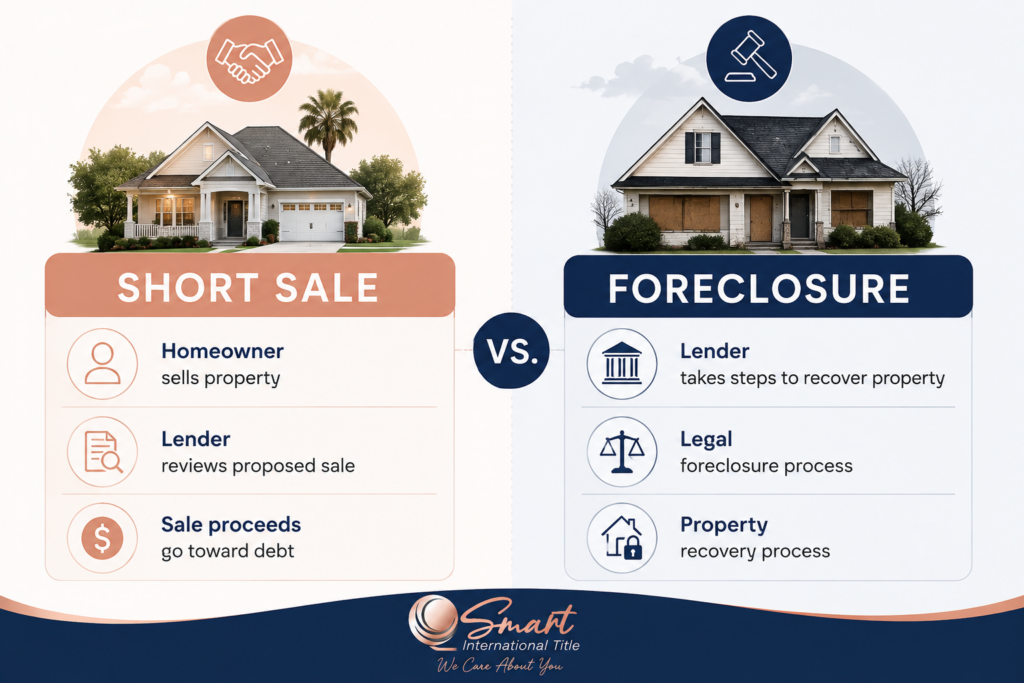
Short sales and foreclosures are not the same thing.
With a short sale, the homeowner sells the property and the lender reviews the proposed transaction.
With a foreclosure, the lender takes steps to recover the property after the borrower has defaulted on the mortgage, following the applicable legal process.
Neither option should be viewed as a simple solution. A homeowner facing financial hardship should seek appropriate professional advice to understand the potential consequences and available alternatives.
The Importance of Having the Right Team
Short sales often involve more coordination than a typical real estate transaction.
The team may include:
- Homeowner
- Listing agent
- Buyer
- Buyer’s agent
- Mortgage lender or servicer
- Short-sale negotiator
- Title company
- Closing professionals
- Attorneys or other professionals, depending on the circumstances
When everyone communicates effectively and understands their responsibilities, the process can be much easier to manage.

Final Thoughts
A short sale can be a complex real estate transaction, but understanding the process can help buyers, sellers, and real estate professionals know what to expect.
From evaluating the homeowner’s situation to listing the property, receiving an offer, obtaining lender approval, resolving title issues, and finally reaching the closing table, every step matters.
If you’re considering a short sale in Florida, don’t wait until the last minute to start asking questions. Early preparation and the right professional guidance can help you better understand your options and prepare for the transaction.
At Smart International Title, we understand that every transaction has its own challenges. Our goal is to help keep the title and closing process organized, clear, and as smooth as possible, because at the end of the day, We Care About You.

This article is intended for general informational purposes only and does not constitute legal, financial, tax, or real estate advice. Short-sale requirements and outcomes vary depending on the circumstances and the parties involved. Consult the appropriate licensed professionals regarding your specific situation.